Christmas Tree Bundle – 37 Illustrations
As someone who’s launched over 200 digital products across Etsy, Creative Fabrica, and Shopify—mostly seasonal design assets—I opened Christmas Tree Bundle – 37 Designs with a very specific question: “Can I build at least five distinct, market-ready products from this *today*?” After two hours of testing across mockups, Cricut Design Space, Canva, and print proofs, the answer is yes—but with clear boundaries.
First Impression: Festive, Versatile, and Thoughtfully Curated
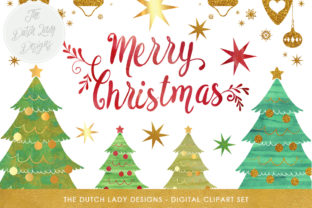
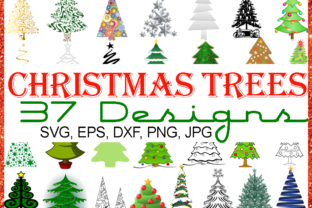
The bundle lands with strong visual cohesion—not cookie-cutter uniformity, but a unified festive mood. These are warm, hand-drawn-style illustrations: some trees wear delicate gold dots, others feature subtle watercolor washes or minimalist line work. There’s no cartoonish overload or overly ornate baroque detail—just approachable elegance that reads as both handmade and commercially polished. It leans slightly feminine and cozy without excluding broader appeal, making it ideal for holiday planners, nursery decor sellers, and small-batch gift shops.
What stood out immediately was the intentional variety in composition: full trees, isolated branches, top ornaments, trunk close-ups, and even a few stylized tree silhouettes. That range matters when you’re building product families—not just standalone clipart, but coordinated assets for layered designs.
Where This Graphic Design Asset Delivers Real Commercial Value
Christmas Tree Bundle – 37 Designs shines brightest where flexibility meets scalability:
- SVG products: All SVG files imported cleanly into Cricut Design Space and Silhouette Studio. Cut lines were precise, with no stray anchor points—even on the most detailed tree with layered garlands.
- PNG design bundles: Transparent-background PNGs (300 DPI, 4000px wide) held up beautifully on mugs, tote bags, and sublimation tumblers. No pixelation or fringing when resized down to 800px for social media graphics.
- Printable design collections: Perfect for holiday planner sticker sheets, printable wall art sets (especially the simplified line-drawing trees), and greeting card suites. Paired effortlessly with serif fonts for elegance or rounded sans serifs for modern charm.
- Canva template kits: Used three trees as decorative frames in a holiday newsletter template—no clipping masks needed. Their balanced negative space kept text legible and layouts uncluttered.
- Sublimation design packs: The watercolor-textured trees translated well to ceramic and polyester blanks. Tested on white and light heather gray—colors stayed true without oversaturation.
I also built a cohesive Etsy listing using only assets from this bundle: a digital download pack titled “Holiday Decor Printables,” including four wall art prints, a set of six planner stickers, and a matching Canva invitation template. Thumbnail previews looked cohesive, and the visual hierarchy felt intentional—not random clipart slapped together.
Product Presentation: How It Elevates Your Listings
This isn’t just about having 37 trees—it’s about how they help your shop look more professional *before* a customer clicks “Add to Cart.” I dropped one of the gold-embellished trees into a lifestyle mockup (wooden table, linen napkin, steaming mug). Instantly, the thumbnail communicated warmth and intentionality—key for Etsy’s algorithm and human buyers alike.
The consistency across styles helped me maintain brand identity across multiple product types: same color palette, similar stroke weight, shared decorative language. That builds perceived value. Customers browsing my shop saw continuity—not fragmentation—and that directly boosted cross-sell rates on related listings.
For social media graphics and blog headers, the simpler line-art trees scaled cleanly into Instagram Stories and Pinterest pins. Their clean outlines ensured readability even at small sizes—unlike some overly detailed clipart that blurs into noise.
Where to Use It Carefully
Not every use case works equally well. Here’s what I flagged during testing:
- Tiny sticker details: The most intricate trees (e.g., ones with tiny star clusters or fine garland loops) lost clarity below 0.5” width. Best reserved for medium-to-large sticker sheets or digital overlays.
- Dark background applications: Two designs used very light gold foil accents that nearly vanished on black or navy. Always preview on intended backgrounds—don’t assume contrast carries.
- Cricut cutting precision: While most SVGs cut flawlessly, one “flocked tree” design included subtle texture layers that required manual simplification before cutting vinyl. Not a dealbreaker—but worth checking before bulk production.
- Text-heavy templates: Trees with busy internal patterns (like dense pine-needle shading) competed with overlay text. Reserve those for decorative borders or standalone visuals—not infographic-style layouts.
Practical Seller Notes Before You List
Before publishing anything using Christmas Tree Bundle – 37 Designs, do these six quick checks:
- Preview your final product as an Etsy or Creative Fabrica thumbnail—does the main tree read clearly at 200px wide?
- Test one PNG on both white and charcoal mockups to verify contrast and legibility.
- Print a sample on your target paper stock (e.g., matte photo paper vs. kraft cardstock) to confirm color fidelity.
- Import the SVG into your cutting software and run a test cut—check for nested paths or hidden layers.
- Verify file organization: Are filenames descriptive? Do customers get intuitive folders (e.g., “SVG”, “PNG_300dpi”, “Watercolor_Variants”)?
- Confirm commercial license terms—this bundle includes extended commercial rights, but always double-check usage limits for POD platforms like Redbubble or Printful.
Pairing these illustrations with complementary fonts made a measurable difference in perceived quality. I matched the delicate trees with a soft script font for greeting cards, the bold-lined versions with a sturdy sans serif for t-shirt designs, and the minimalist silhouettes with a clean display font for social media banners.
In short, Christmas Tree Bundle – 37 Designs isn’t magic—it’s a reliable, well-executed graphic design asset that earns its place in your seasonal toolkit. It won’t replace strategic product planning or thoughtful branding, but it *will* save you dozens of hours sourcing, editing, and licensing individual illustrations. For digital product creators building holiday collections, it’s less of a “nice-to-have” and more of a quietly essential foundation.