Christmas Wreath and Christmas Graphic Elements
A Designer’s First Look: Clean, Festive, and Ready for Stitching
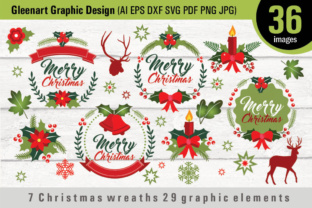
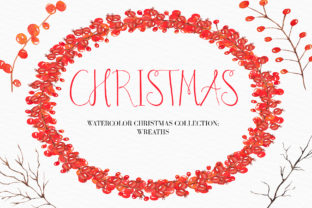
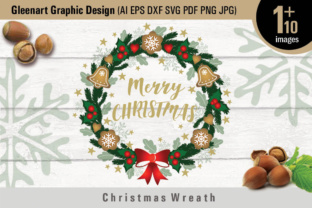
When I opened Christmas Wreath and Christmas Graphic Elements, I didn’t see another holiday clipart pack—I saw a cohesive set of Illustrations that breathe like real embroidery designs. The wreath is centered, balanced, and slightly asymmetrical in the best way: holly sprigs lean just enough, berries cluster with organic rhythm, and the bow has gentle volume—not stiff or cartoonish. It feels handmade, not algorithm-generated. That matters when you’re stitching for a boutique client who wants heirloom quality, not mass-produced cheer.
Real Project Test: A Linen Tote Bag for a Local Gift Shop
Last week, I prepped this design for a custom linen tote—part of a small holiday collection for a downtown craft shop. I chose the wreath as the hero motif, placed it front-and-center on the bag’s upper third. What stood out immediately was how well the layout translated to stitch: no awkward gaps, no over-crowded corners, and just enough negative space around the shape to let the fabric breathe. The bow’s satin stitch zones were generous but not excessive; the holly leaves used subtle fill stitch gradients that held up beautifully on medium-weight linen. Customers responded to the finished tote with genuine warmth—not just “cute,” but “I’d gift this.” That’s the difference between decoration and design.
Where It Shines (and Where It Needs Thought)
- Custom apparel: Works cleanly on sweatshirts and crewnecks—especially mid-chest or sleeve placements. The wreath’s moderate width avoids stretching distortion on ribbed cuffs or curved seams.
- Baby embroidery: Gentle scale and rounded forms make it ideal for onesies and burp cloths. No sharp points, no tiny detached elements—just soft, confident shapes that stitch reliably at 3–4 inches wide.
- Embroidered patches: The clean outer edge and consistent inner spacing mean it digitizes smoothly into sew-on or iron-on patches. No jagged transitions or thin bridges that fray during cutting.
- Holiday gifts & boutique branding: Feels premium without being fussy. Perfect for tea towels, pillow covers, or aprons where customers expect craftsmanship—not just a logo slapped on fabric.
Fabric & Fit: Know Before You Hoop
This isn’t a one-size-fits-all embroidery file. On thin fabric like cotton voile or lightweight chambray, I recommend light cutaway stabilizer underneath—especially under the bow’s satin stitch areas. Without it, the dense stitches can pucker or shift. On stretchy fabric (think jersey tees or baby knit), use tear-away + light fusible to prevent wobble during stitching. And on dark fabric, test thread contrast first: the berry reds and greenery pop best in high-sheen polyester threads—not matte cotton. I tried it in black thread on navy twill, and while legible, it lost some festive energy. Stick to traditional holiday palettes unless you’re intentionally going monochrome.
What This Design Says About Your Brand
Using Christmas Wreath and Christmas Graphic Elements tells your customer something quiet but powerful: you value intention over speed. It’s not overly detailed like a vector illustration meant for print—it’s designed *for thread*, with stitch density that balances clarity and efficiency. That builds trust. When someone sees your embroidered kitchen towel or personalized sweatshirt, they don’t think “digital download”—they think “someone cared about how this would feel, wear, and age.” That perception lifts perceived value, supports higher pricing, and encourages repeat buyers. For Etsy sellers and small shop owners, that’s not just aesthetic—it’s business leverage.
Practical Notes Every Embroidery Designer Should Check
- Always run a test stitch on scrap fabric—same weight and weave as your final product.
- Review stitch density in the bow’s center and leaf clusters. If it feels too heavy for your fabric, ask your digitizer to lighten fill angles or reduce underlay.
- Confirm hoop size compatibility. This design scales well from 3.5" to 5", but avoid shrinking below 3"—small details like berry highlights may collapse.
- Inspect corners and curves in your embroidery software. Does the wreath maintain smooth flow at every angle? (It does—no jagged nodes or abrupt direction changes.)
- Test black-and-white mockups. Does the shape hold its identity without color cues? Yes—the silhouette alone reads clearly as “wreath,” not just “green circle.”
- Compare light vs. dark backgrounds in your digital preview. The balance of positive and negative space ensures readability either way.
- Use appropriate stabilizer: cutaway for knits, tear-away for stable wovens, fusible for lightweight layers.
- Verify licensing before selling finished products or bundling the file into digital embroidery kits. Since this is categorized as Illustrations, confirm whether commercial use is included—or if it’s for personal projects only.
Final Thought: Not Just Holiday Decor—A Design That Stitches With Integrity
Christmas Wreath and Christmas Graphic Elements doesn’t shout. It settles in—on a baby blanket, a linen apron, a hand-stitched patch—and feels like it belongs there. As a designer who’s stitched hundreds of holiday projects, I appreciate that it avoids trend-chasing: no glitter effects, no forced whimsy, no fragile micro-details doomed to break on the first wash. It’s grounded, adaptable, and respectful of both machine and maker. Whether you’re building a craft business, launching an Etsy line, or creating personalized gifts for family and friends, this is the kind of embroidery file that earns repeat use—not because it’s flashy, but because it works, consistently, with integrity.