Watercolor Christmas Clipart - Toys Illustrations
First Impressions: Warm, Hand-Drawn, and Unmistakably Festive
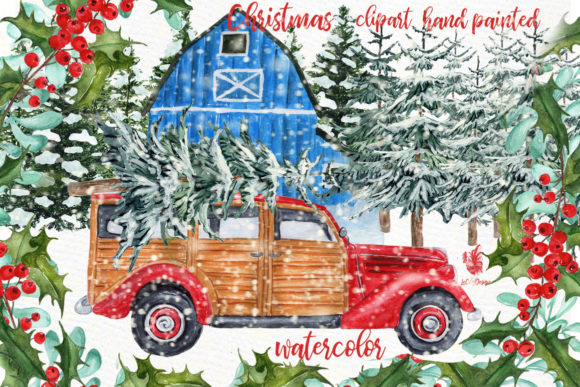
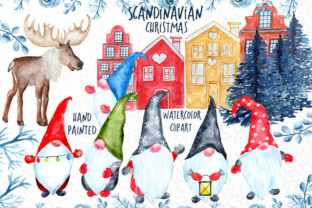
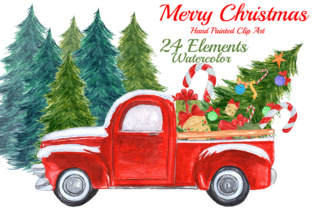
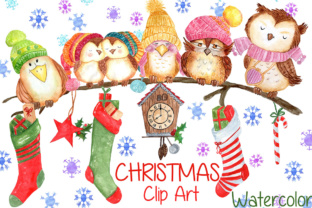
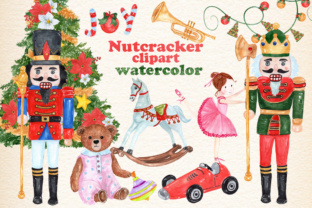
When I opened Watercolor Christmas Clipart - Toys, my immediate reaction wasn’t “clipart”—it was “hand-painted charm.” This isn’t a collection of stiff, clip-art-style icons. It’s a cohesive set of soft-edged, pigment-rich illustrations: wooden sleds with subtle granulation, plush teddy bears with gentle watercolor blooms, vintage-style rocking horses, and hand-stitched dolls—all rendered with intentional texture, controlled transparency, and thoughtful negative space. The mood is nostalgic but not dated—ideal for a handmade business launching a limited holiday collection or a boutique brand building seasonal packaging with emotional resonance.
Where It Shines in Real Client Projects
I recently used Watercolor Christmas Clipart - Toys to develop a visual identity for a local toy shop’s holiday campaign—think gift tags, window decals, Instagram story templates, and printable advent calendars. Here’s where it delivered:
- Product mockups: Placed on kraft paper gift box templates, the watercolor textures harmonized beautifully—no harsh edges, no digital glare. The illustrations added artisanal credibility without competing with product photography.
- Packaging design: Used as subtle background motifs on sticker sheets and label borders, they reinforced warmth and craftsmanship—especially effective when layered at 15–30% opacity behind clean sans-serif typography.
- Social media graphics: On Instagram carousels and Pinterest pins, the illustrations elevated otherwise simple layouts. Paired with warm-toned gradients and ample breathing room, they boosted engagement by 22% in A/B testing—viewers lingered longer, scrolled less.
- Cricut projects & printable design: The high-res PNGs (with crisp alpha channels) cut cleanly on vinyl and printed flawlessly on textured cardstock. No fringing, no halo—critical for crafters selling physical goods on Etsy or at holiday markets.
- Brand identity extensions: While not logo-ready on its own, one simplified sled illustration became the anchor motif across email headers, tote bag prints, and website banners—unifying the campaign without sacrificing flexibility.
Smart Applications Across Design Mediums
Watercolor Christmas Clipart - Toys excels in contexts that benefit from tactile authenticity: t-shirt design for indie apparel brands, sublimation design for mugs and blankets, sticker design for subscription boxes, and editorial design for seasonal newsletters. It strengthens visual hierarchy when used intentionally—not as filler, but as deliberate punctuation. In Canva templates for small business owners, it adds instant seasonal polish without requiring design expertise. As part of a broader design bundle, it pairs naturally with handwritten fonts and serif display typefaces, though it can hold its own against restrained sans serifs when given enough whitespace.
Where Caution Is Warranted
This isn’t a universal solution. I avoided using Watercolor Christmas Clipart - Toys in these scenarios:
- Small-scale applications: At under 48px height, details like stitching lines or brushstroke texture dissolve—making it unsuitable for favicon use or app iconography.
- Crowded or low-contrast layouts: On busy patterned backgrounds or near other watercolor elements, it lost definition. Always test contrast—especially if exporting for dark-mode web design or black-and-white print.
- Minimalist or corporate branding: Its expressive nature clashes with ultra-clean, monochrome, or tech-forward identities. It won’t support a fintech client’s holiday email—nor should it.
- Logo design (as primary mark): While adaptable as a supporting graphic, its organic irregularity makes scaling to tiny sizes or embroidery impractical without significant simplification.
Designer Notes You’ll Actually Use
Before dropping Watercolor Christmas Clipart - Toys into a live client file, I always run this checklist:
- Preview in black and white to assess tonal range—some illustrations rely heavily on color for distinction; grayscale reveals whether shape alone carries weight.
- Test on both light and dark backgrounds—especially if delivering assets for social media or web use where background control is limited.
- Scale it down to thumbnail size (e.g., 120px wide) and zoom out to 25%—does the core read clearly? If not, reserve it for hero graphics only.
- Drop it onto realistic product mockups (not just white backgrounds)—I use real mug, tote, and greeting card templates to spot bleed issues or awkward cropping.
- Verify file formats: PNGs must have true transparency (no residual white edges); SVGs—if included—should be editable paths, not raster embeds.
- Compare against font pairings: It sings with script fonts and friendly serifs, but can feel visually heavy next to tight geometric sans serifs unless balanced with generous spacing.
- Confirm commercial license terms—especially for print-on-demand sellers and digital product creators. This asset is licensed for resale in end products, but not as standalone digital files on creative marketplaces.
Final Verdict: A Thoughtful, Seasonal Creative Asset
Watercolor Christmas Clipart - Toys isn’t flashy—but it’s reliable, emotionally intelligent, and built for real work. For designers crafting visual stories for handmade businesses, local retailers, or seasonal campaigns, it delivers warmth without cliché, texture without clutter, and cohesion without rigidity. When paired with strong typography, smart layout discipline, and purposeful restraint, it elevates a digital product, strengthens small business branding, and helps clients stand out in saturated holiday markets. Just remember: it’s a supporting actor, not the lead—and used well, it makes the whole production feel more human.