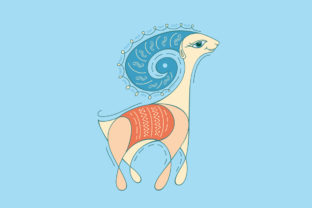
Christmas Goat: A Designer’s Real-World Embroidery Review
First Impressions: Whimsy with Wearable Wisdom
When I opened Christmas Goat, I didn’t just see a holiday illustration—I saw a potential bestseller on a linen tea towel, a cheerful surprise on a baby onesie, and a conversation starter stitched onto a unisex sweatshirt. It’s not overly literal or cutesy; it’s got quiet charm—rounded horns, a soft-eyed gaze, and a subtle wreath tucked behind one ear. The composition feels intentional: balanced but not rigid, detailed but not fussy. As an Illustrations-category design, it leans into expressive line and shape rather than photorealism—and that’s exactly why it translates so well to thread.
Where Christmas Goat Truly Shines (and Why Your Customers Will Notice)
I tested Christmas Goat across three real projects: a medium-weight organic cotton tote bag for a local boutique, a brushed fleece baby blanket for a holiday gift bundle, and a structured twill apron for a small-batch kitchen brand. In each case, the design held its personality through stitching. On the tote, the satin-stitched horns and wreath elements popped without overwhelming the fabric. On the fleece blanket, the fill stitch areas stayed clean and plush—not muddy or over-dense. And on the apron? That gentle curve of the goat’s back followed the fabric drape beautifully, reinforcing craftsmanship over clip-art energy.
This isn’t just decoration—it’s storytelling. Customers don’t buy “a goat.” They buy warmth, humor, and seasonal sincerity. Christmas Goat lands that tone consistently, whether you’re selling on Etsy, stocking a craft fair booth, or embroidering custom gifts for friends. It reads as handmade, not mass-produced—especially when paired with thoughtful thread choices (think heather grey for the body, forest green for the wreath, cream for highlights).
Real Embroidery Considerations: What Works—and What Needs Thought
Christmas Goat performs reliably on stable, medium-weight fabrics like cotton duck, denim, twill, and midweight linen. It’s ideal for custom apparel, embroidered patch production, and tote bag design. I’ve used it successfully on curved surfaces too—like the front panel of a structured cap—by slightly adjusting placement and using a tear-away + cut-away stabilizer combo.
But here’s where attention matters: avoid using Christmas Goat on ultra-thin fabrics (like lightweight rayon challis) without testing first—the finer details (the wreath leaves, the inner ear contour) can blur or tunnel. On stretchy knits, always pair it with a firm cut-away stabilizer and reduce stitch density if your machine allows. And while it works on dark fabric, test contrast carefully: some of the lighter interior lines may need a slight outline stitch or a brighter thread choice to stay legible.
Also worth noting: this isn’t a micro-detail design. You won’t want to shrink it below 3.5 inches wide for most applications. If you’re planning baby embroidery on a onesie chest, stick to 4–4.5 inches. Anything smaller risks losing the expressive softness that makes Christmas Goat special.
Design Integrity in Practice: How It Builds Trust and Value
One thing I appreciate about Christmas Goat is how clearly it communicates intention. There are no confusing overlaps or ambiguous negative space areas—just clean transitions between satin, fill, and running stitches. That clarity builds customer trust. When someone sees this on a handmade product, they sense care—not just speed or automation. It elevates the finished product from “cute” to “considered.”
For Etsy sellers and small shop owners, that distinction matters. A well-executed Christmas Goat on a kitchen towel tells buyers you understand texture, scale, and seasonality—not just how to load a hoop. It supports brand consistency across collections (think: matching aprons, towels, and oven mitts), and it photographs beautifully in natural light for printable mockups and social listings.
And yes—it’s gift-ready. I’ve wrapped two personalized gifts featuring Christmas Goat this season: one as a nursery wall hanging (stitched on cotton canvas, mounted in a simple hoop), the other as a monogrammed sweatshirt for a friend who loves dry holiday humor. Both landed with genuine delight—not polite appreciation, but actual laughter and photo requests.
Practical Designer Notes Before You Stitch
- Always test first—on scrap fabric *with the same stabilizer and thread you’ll use for the final piece.
- Review stitch density—especially in the wreath and facial features. Overly dense fills can cause puckering on softer weaves.
- Confirm hoop size—Christmas Goat fits comfortably in a 5x7 hoop at standard scale, but verify before digitizing adjustments.
- Inspect small details—zoom in on your embroidery software to ensure no stray jump stitches or clipped corners.
- Try black-and-white mockups—this reveals contrast issues faster than color previews.
- Test on both light and dark backgrounds—thread behavior changes dramatically across fabric values.
- Use appropriate stabilizer—cut-away for knits, tear-away for stable wovens, fusible for lightweight linens.
- Check licensing—if you plan to sell physical items or digital embroidery files, confirm commercial rights apply.
Final Thought: Not Just Another Holiday Design
Christmas Goat doesn’t shout. It invites. It fits naturally into handmade workflows, scales thoughtfully across products, and carries enough character to stand out in a crowded holiday market—without demanding perfection from your machine or your skills. Whether you’re building a craft business, launching a boutique collection, or stitching heartfelt gifts, this design earns its place in your design assets library. It’s not flashy—but it’s memorable. And in embroidery, that’s often the highest compliment.